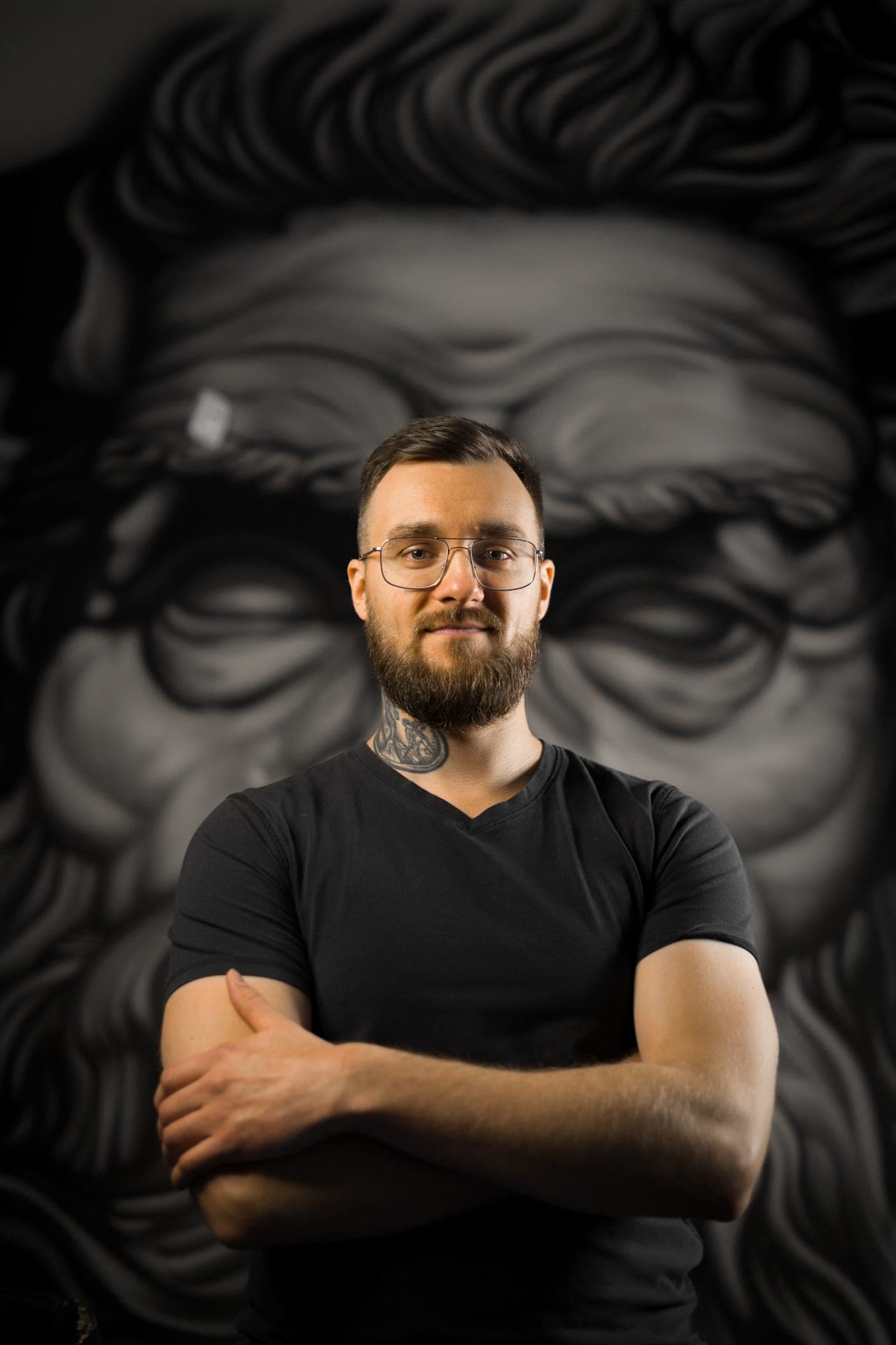
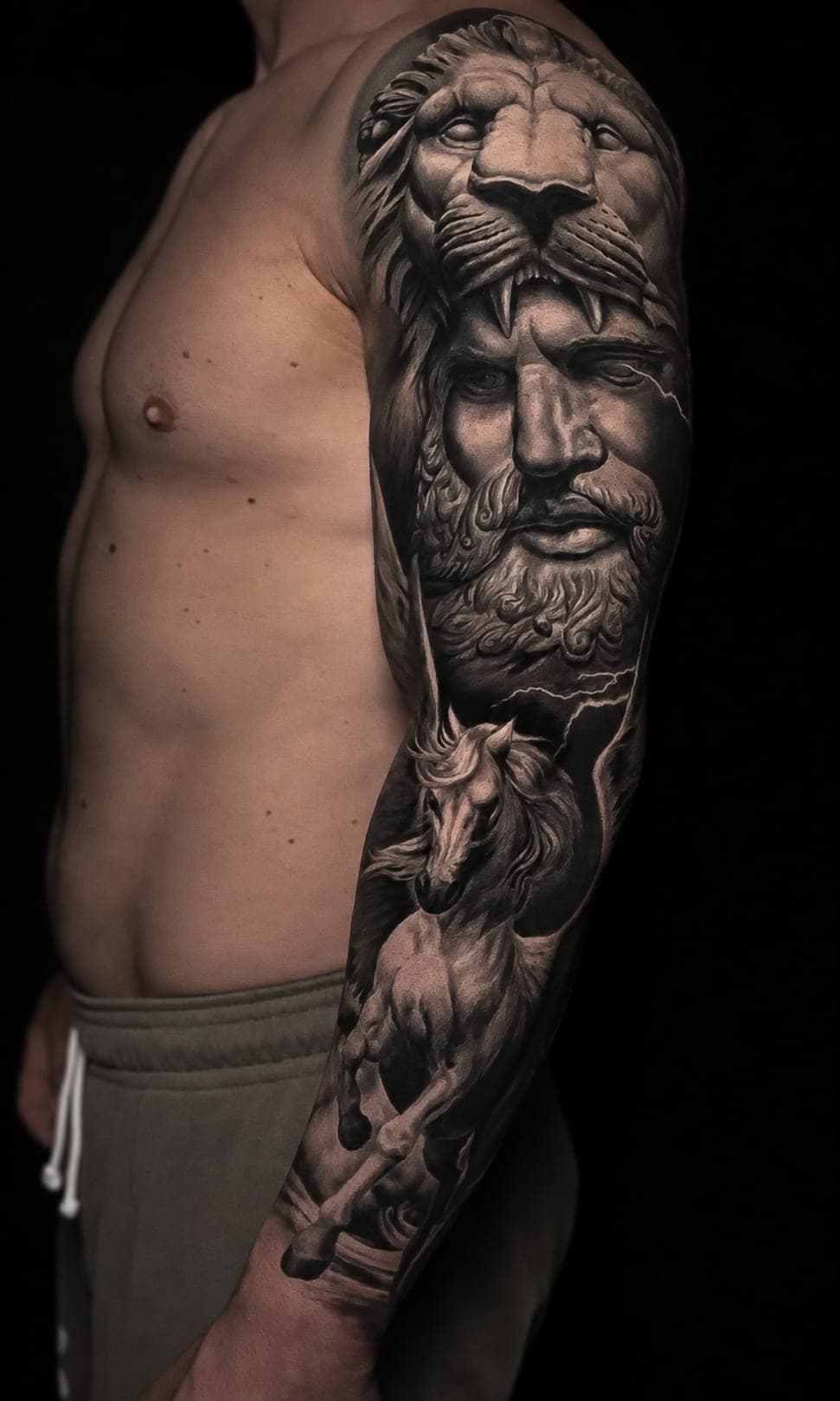
A great tattoo comes from the right client meeting the right tattoo artist.
After years of tattooing, I know quality is about more than how confidently I handle the machine. What we decide together, how we plan the design and the conditions we create during the session matter just as much.
First, let's decide what result you want
Photorealism and graphic tattooing are two different visual languages. Neither is inherently better. A graphic design can rely on clear forms, bold contrast and deliberate simplification. A photorealistic one calls for subtle shading, light, textures and minute details.
When someone wants a tattoo that looks like a photograph, the amount of detail matters to the time involved. With a fixed time limit, we can create a more graphic interpretation together. If photographic detail is the priority, we need to give it enough room.
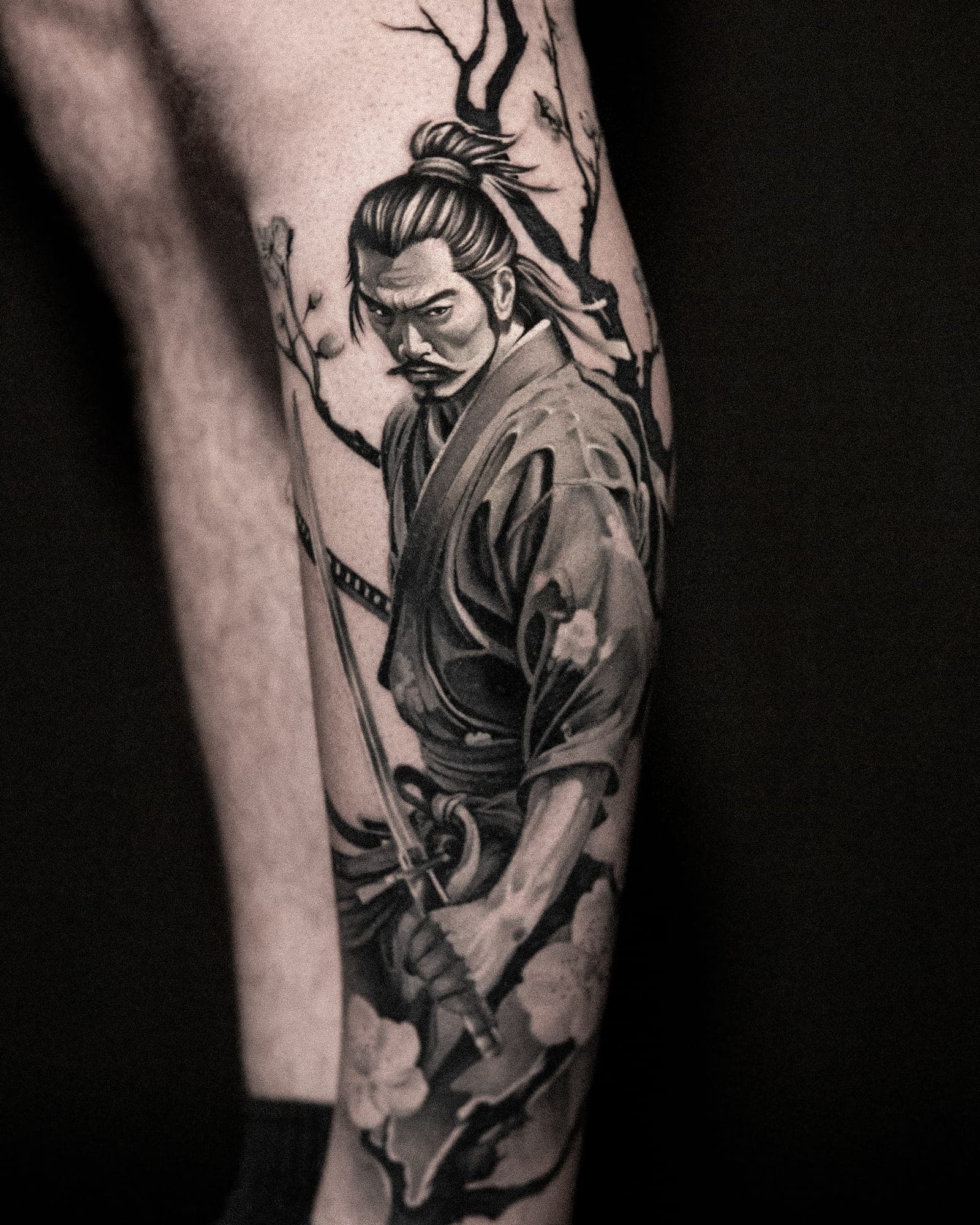
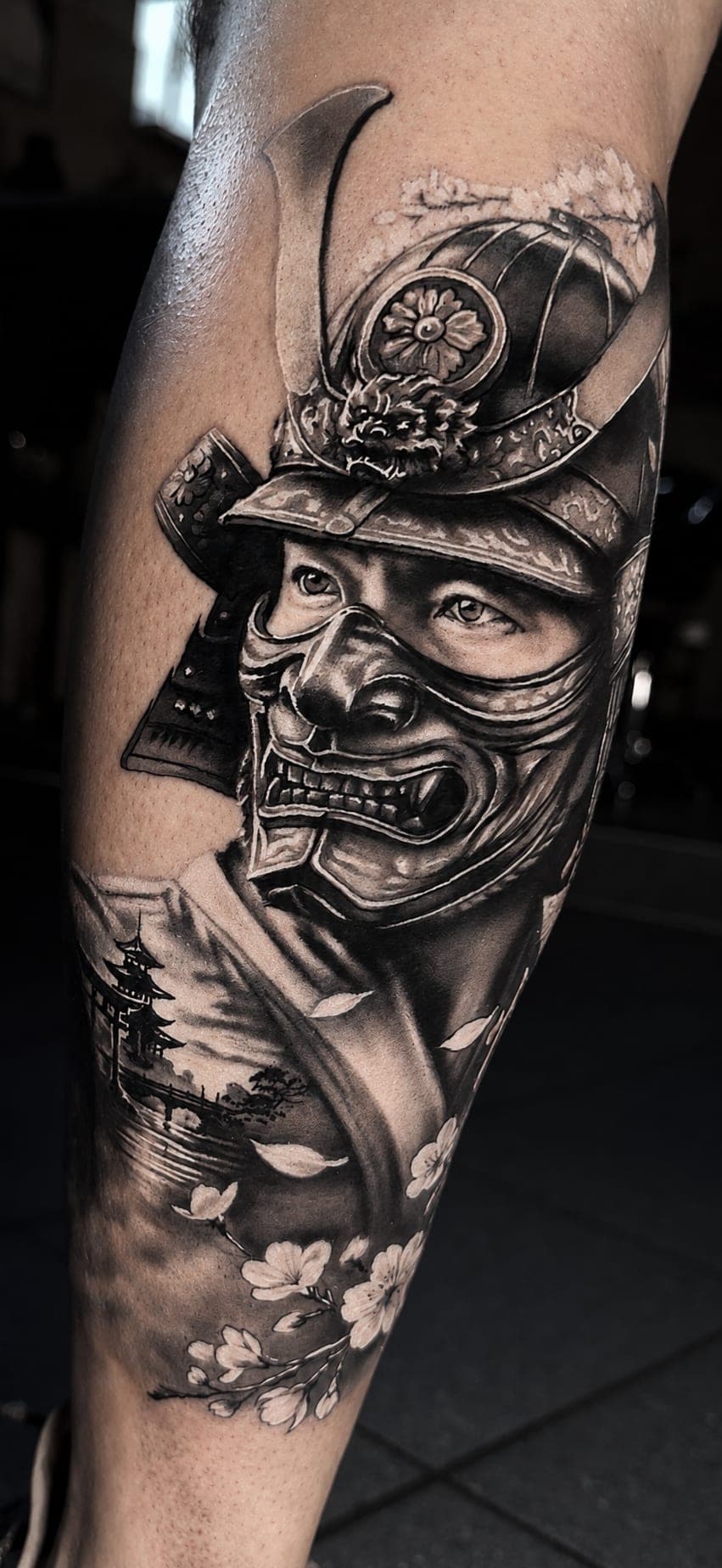
These are two different tattoos from Umbra's portfolio, illustrating different approaches to related imagery. They are not before-and-after versions of one design or a comparison of session lengths.
Recently I worked on a design featuring a soldier with a sword, a battlefield and clouds. The client wanted a highly realistic result but had time for one session. I showed two options: a simplified version for that time frame and a more detailed one requiring at least two sessions. The point was to let him choose the result consciously, not just the appointment length.
Time and budget are part of the design
Everyone has their own financial limits. I understand that, and I would rather discuss them openly at the beginning. Knowing the budget helps me suggest a design with a sensible scope, composition and number of sessions.
When I estimate the number of sessions, I draw on years of experience. It is still an estimate, not a promise that every texture, tonal transition and section of skin will take the same amount of time. Detail, skin response, placement and breaks can all affect the actual duration.
More flexibility with time does not mean working without discipline. It means being able to give the result we have agreed on the attention it truly requires. If the scope has to stay fixed, we design intentionally for a coherent outcome.
A good question before your session
What can we do brilliantly within my budget, and what could we gain by allowing more time for detail?
The best designs grow out of dialogue
I believe in an equal partnership. The client brings the personal meaning of the tattoo, their references and expectations. The artist brings knowledge of composition, anatomy, style and what can actually be achieved on skin.
It is not about one person's vision winning. It is about discovering the strongest solution together. Often it is only through discussion that we learn which elements should stand out, which need simplifying and how the whole design should flow.
Mutual trust also creates space for calm, focused work. Clients should feel comfortable asking questions and voicing doubts; my responsibility is to explain decisions and realistic possibilities clearly. That is how we build confidence on both sides.
A great tattoo comes from the right client meeting the right tattoo artist.
Concentration is an invisible part of the craft
Sometimes I spend a long time working on an area only a few centimetres across. I am building shapes, subtle transitions and details that should look natural from a distance, even though they require hundreds of small decisions.
In my experience, I often need around 25 minutes of uninterrupted work before I feel fully in rhythm. My attention settles more and more deeply into the task. Psychology describes a related experience as flow.
An interesting parallel
A 2024 scientific review cites experienced gamers who reported needing at least 25 minutes to enter flow. I recognise a very similar rhythm in my own work.
Read the review by Durcan and colleaguesThe 25 minutes were self-reported by gamers, and separately reflect the artist's own experience. They are not a universal scientifically established threshold for everyone.
That parallel feels natural to me. Both activities demand skill, sustained attention and growing immersion. At the most precise stages of tattooing, keeping that continuity is particularly valuable.
Research into task switching shows that part of our attention may remain with the previous task after we move on — a phenomenon called attention residue. Another experiment associated interruptions with more stress and time pressure, although the measured quality of tasks did not decline.
That is why I like to agree on the main decisions during the consultation and design stage, then leave room for uninterrupted work. Questions and conversation are always welcome — natural pauses in the session are often the best moments to give them proper attention.
Your comfort is part of quality
We tattoo living skin, not a motionless canvas. The body responds to pain, tension and fatigue. Everyone has a different tolerance, and even small involuntary movements can mean pausing particularly precise work.
That does not mean you should grit your teeth and endure everything. Quite the opposite: please tell me as soon as you feel uncomfortable. We can adjust your position, take the breaks you need and, if necessary, spread a larger design across more sessions.
A well-planned session is one where the client feels safe and the artist has the conditions to work carefully. Both matter.
How can we create the best conditions together?
You do not need technical expertise to work well with your tattoo artist. A few simple choices make a real difference:
- 01
Name your priority
Tell us whether photorealism, a graphic style, the composition or one particular motif matters most.
- 02
Talk openly about budget
It is easier to plan a strong design when we understand your real limits and the scope you want.
- 03
Make decisions together
Ask questions, share your ideas and make room for the artist's experience-based suggestions.
- 04
Look after your comfort
Speak up about pain and breaks. A sensible pace supports safe, attentive work.
One final thought
The best tattoos are never created alone.
As an artist, I am responsible for the craft, safety and honest guidance. You bring your idea, your story and what matters to you. When we understand each other's possibilities and work together, we make better decisions.
It is not about who is right. It is about finding the best answer for your tattoo together.
Bibliography / Sources
What does research tell us?
These are studies of attention and flow, not experiments measuring tattoo quality. They provide context for my experience without being stretched beyond what the researchers actually measured.
- 01Durcan, Holland, Bhattacharya · 2024 · Communications PsychologyA framework for neurophysiological experiments on flow states
A review of flow research methods that also describes experienced gamers' reports of needing at least 25 minutes to enter the state.
- 02Sophie Leroy · 2009 · Organizational Behavior and Human Decision ProcessesWhy is it so hard to do my work? The challenge of attention residue when switching between work tasks
Two experiments exploring why some attention remains on the previous task after switching activities.
- 03Mark, Gudith, Klocke · 2008 · CHI 2008The cost of interrupted work: more speed and stress
Interruptions were linked to more stress and time pressure. This experiment did not find reduced task quality.